We at Classic Cars Today are fans of trucks, both old and new. Aside from how useful pickups and SUVs are, we can’t deny part of our attraction comes from how body styles of current trucks can be paralleled to the variety of body styles once available on just about every car that’s now considered a classic.
What are we talking about? In the old days, most makes and models were available in coupe, sedan, and wagon configuration – all of them tied together with body panels that were recognizably the same. It was a diversity that truly made things interesting for the car fanatic. “Look, there’s my car as a coupe…as a wagon…”
But those days are pretty much gone. Even best-selling cars haven’t been available as anything other than a sedan in a long time (Toyota Camry ditched coupes & wagons after 1996, and Honda Accord ditched its coupe after 2017). As of the 2027 model year, we’ve got the BMW 4-series available as a coupe, sedan, and convertible; the Mercedes E-Class as a sedan and wagon, and the redesigned Dodge Charger as a coupe (and coming sedan).
If you think about it, pickups and SUVs are really the only modern vehicles left that are built in the classic tradition of body on frame.
If you’re in the market for a pickup truck, in addition to color, upholstery, and engine choices, you will need to choose: Two-wheel-drive or four-wheel-drive? Light duty or heavy duty? Short, standard, or long bed? And for cab sizes, you’ll have to decide among standard, extended, double, quad, crew, access, king, or mega.
After you’ve made your new truck purchase, you have smartly come to our site to accessorize your new ride. You soon find that for some accessories, our website (or our sales agents) will ask you “what size bed do you have?” or “extended cab or crew cab?” Why? For many products, we need to know this to make sure you get the correct-fitting part.
Because of different cab sizes, bed (box) lengths, and wheelbases, the fitment of these accessories (among others) is affected: floor mats, running boards and side steps, car covers, tonneau covers, bed side rails, bed liners, and exhaust systems.
The purpose of this article is to help you understand the terms used by pickup truck makers when they describe their vehicles. We will define the various cab and bed sizes as determined by all 6 manufacturers of “conventional” (we’ll define that too) pickups sold in the U.S.
Chevy Silverado and Colorado, GMC Sierra and Canyon
Ford: F-series (F-150, F-150 Raptor, Super Duty), Ranger
Chrysler: Ram (formerly Dodge) pickups, Jeep Gladiator
Nissan: Frontier
Toyota: Tundra and Tacoma
In order to keep our scope to a manageable size, we will detail current model year pickup truck offerings. If your pickup is on the same platform as current models, much of this info will apply. Do check with your manufacturer if necessary, as specifications can and will change from year to year. You can still use this info, however, to educate yourself about pickup trucks in general. We refer to these as “conventional” pickup trucks as they have a separate cab and bed, each bolted to a full frame. This construction is in part what makes it easy for the manufacturers to offer different cab and bed sizes.
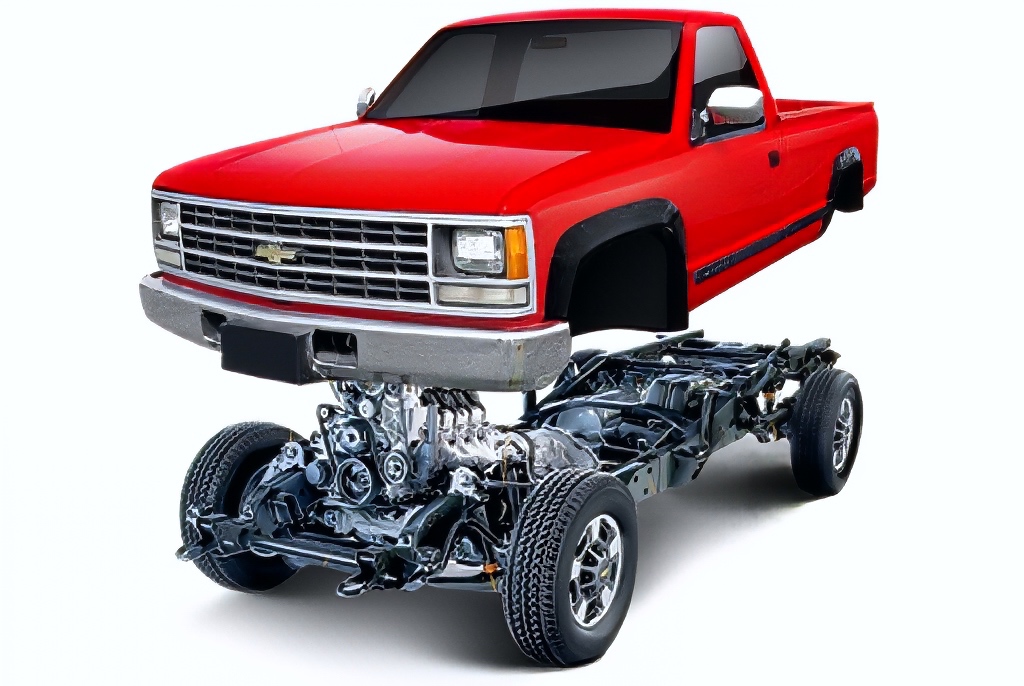
“Non-conventional” pickup trucks feature unibody construction where the bed and the body are integrated into one whole, unbroken piece. As such, there’s no variability in number of doors or length of pickup beds. Examples such as the Rivian R1T, Honda Ridgeline, Chevrolet Silverado EV, GMC Hummer, Ford Maverick, and Hyundai Santa Cruz are outside the scope of this article.
The pickup “cab” is the passenger compartment, the enclosed space where driver and any passengers sit. The attributes which typically define a cab are the number and types of doors, as well as the number of seats.
The pickup “bed” or “box” (the two terms are interchangeable) is the rectangular open area behind the cab which is used for cargo-carrying. The bed is always defined by its length, measured on the inside of the bed from the front inside wall to the inside of the tailgate.
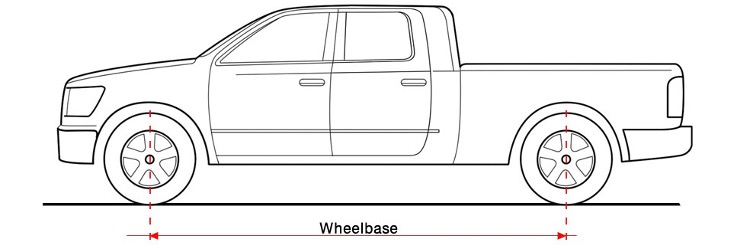
Among our five manufacturers, there is some commonality, and quite a bit of variability, in how pickup truck cab sizes are defined and named. This has become a marketing tool, with some truck makers striving for unique cab styles and/or unique names for their styles. In almost every case, the cabs are defined by door count, length, and/or door hinge placement. Let’s start defining the cabs.
REGULAR / STANDARD CAB
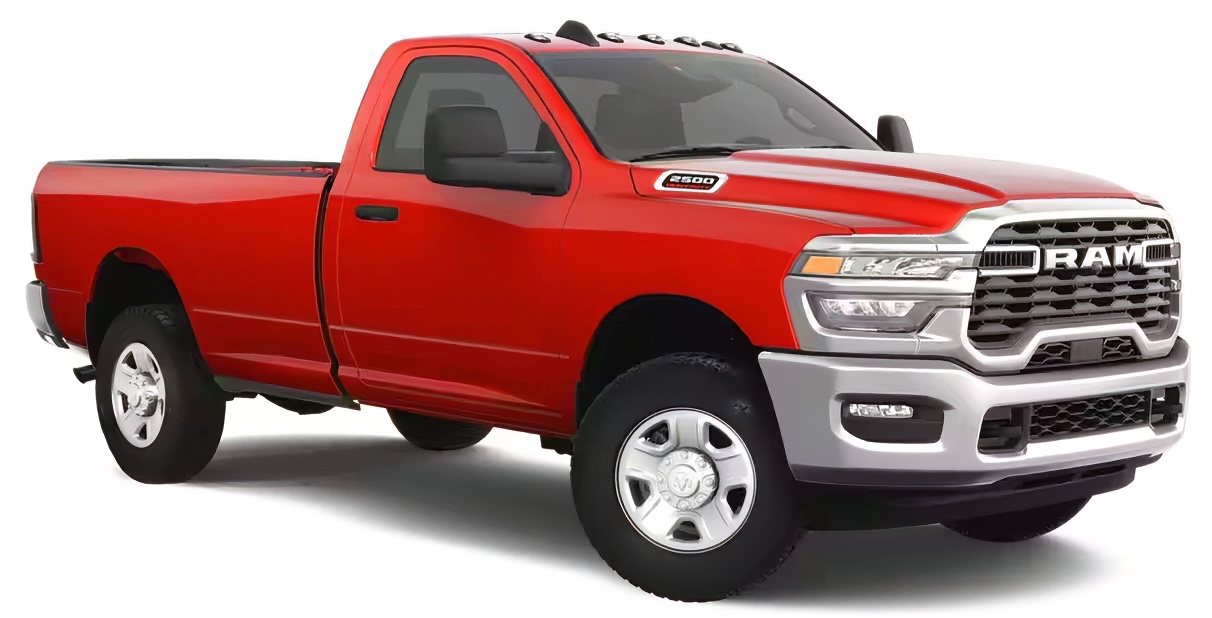
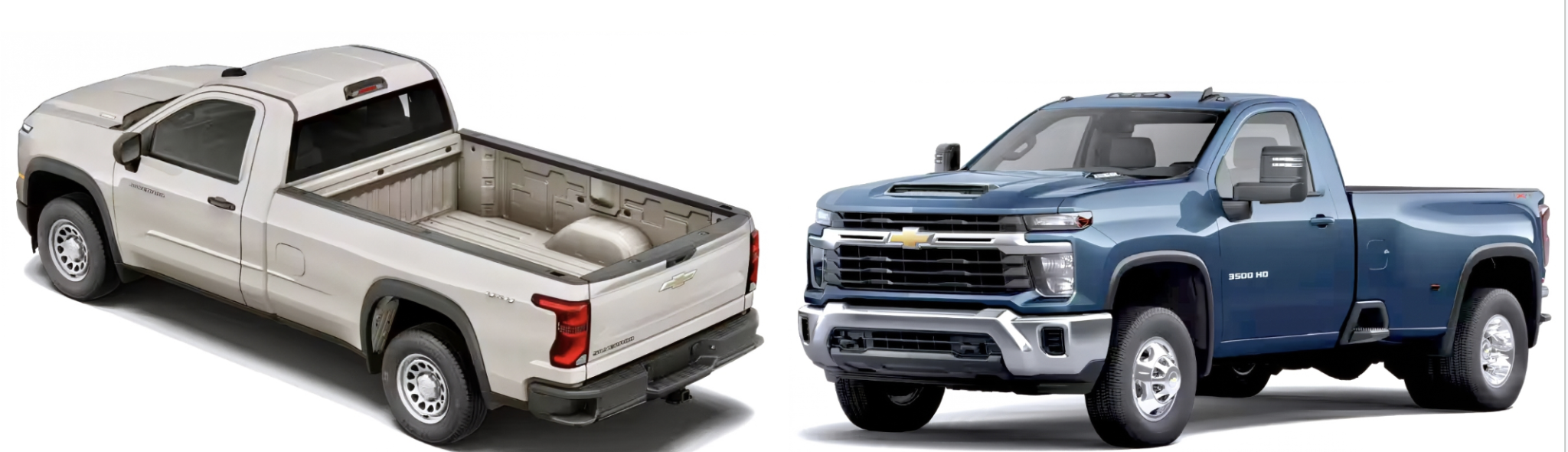
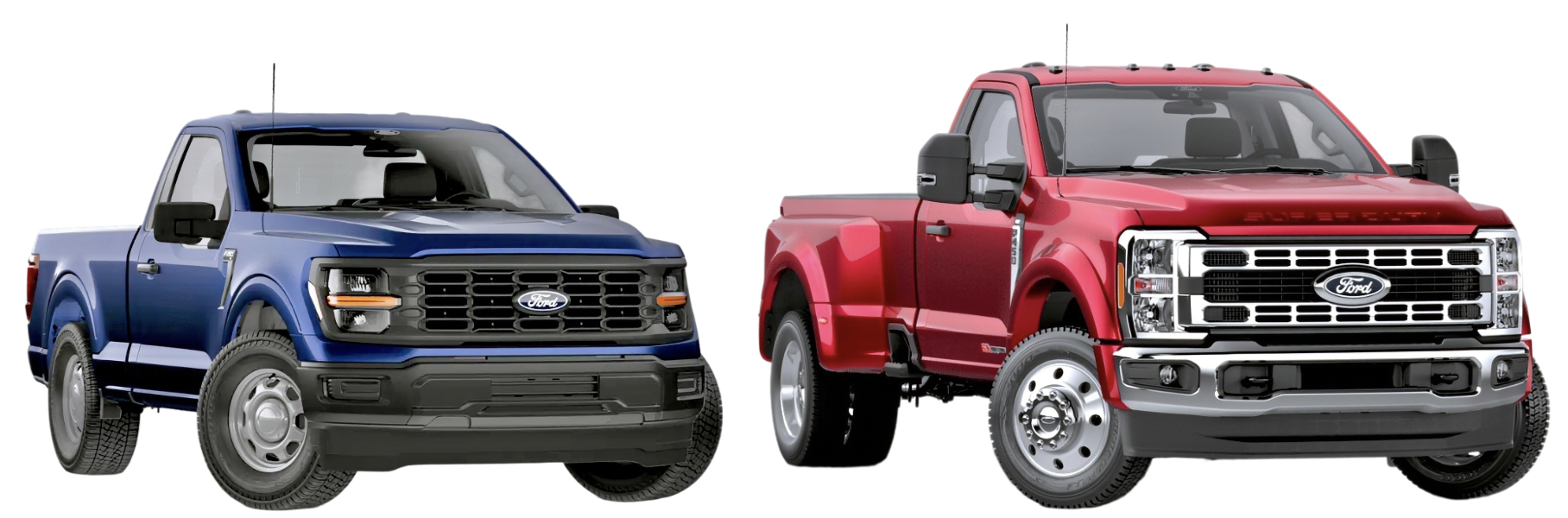
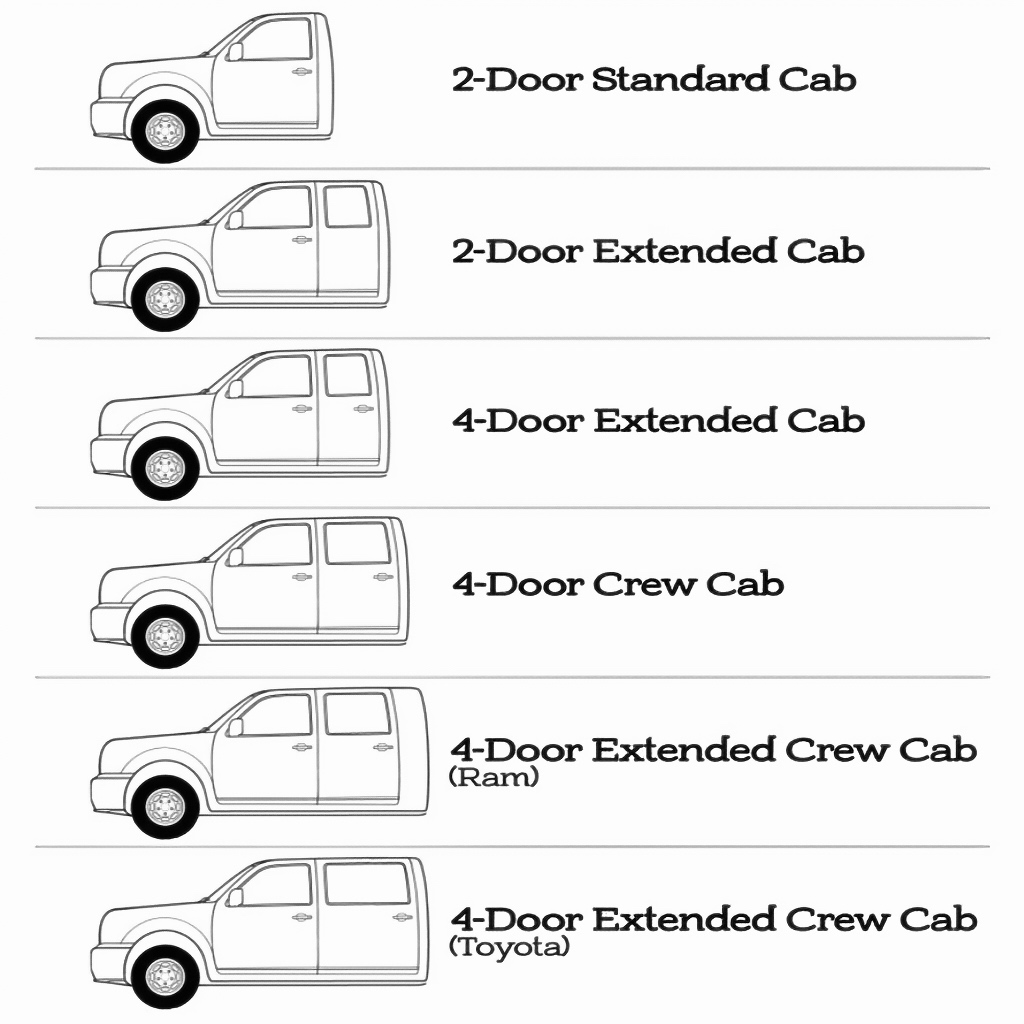
The industry defines these as two-door cabs, with a single row of seats and little or no space behind that seat. Bench or bucket configuration makes no difference. Among the new pickups sold today, the Ford F-series, Chevrolet Silverado/GMC Sierra, and Ram 2500/3500 are available in a regular/standard cab configuration. Smaller models such as the Ford Ranger, Ford Maverick, Jeep Gladiator, Toyota Tacoma, Nissan Frontier, and Chevy Colorado/GMC Canyon are not.
2-DOOR EXTENDED CAB
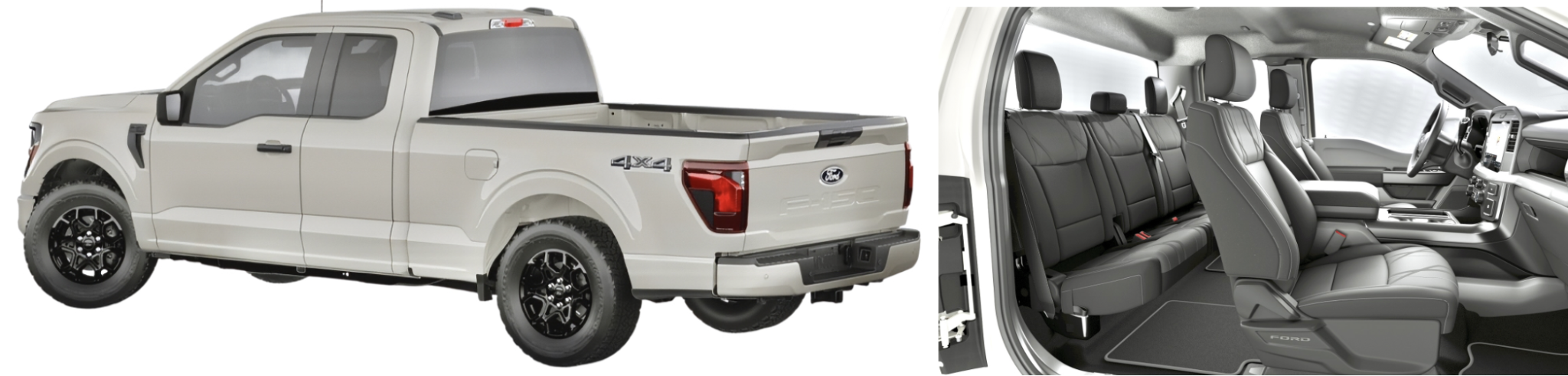
By definition, an “extended cab” typically has a set of rear doors which are rear-hinged, that is, the hinges are opposite the front door hinges. (This door style is sometimes called ‘suicide doors’). A rear-hinged door can ONLY be opened or closed if its adjacent front door is open. There may be a small jump seat for occasional use behind the front seat, or the extra space may be used for storage. Trucks with these kind of rear-hinged secondary doors have no B-pillar to allow for easy, wide-open access to the rear seating area.
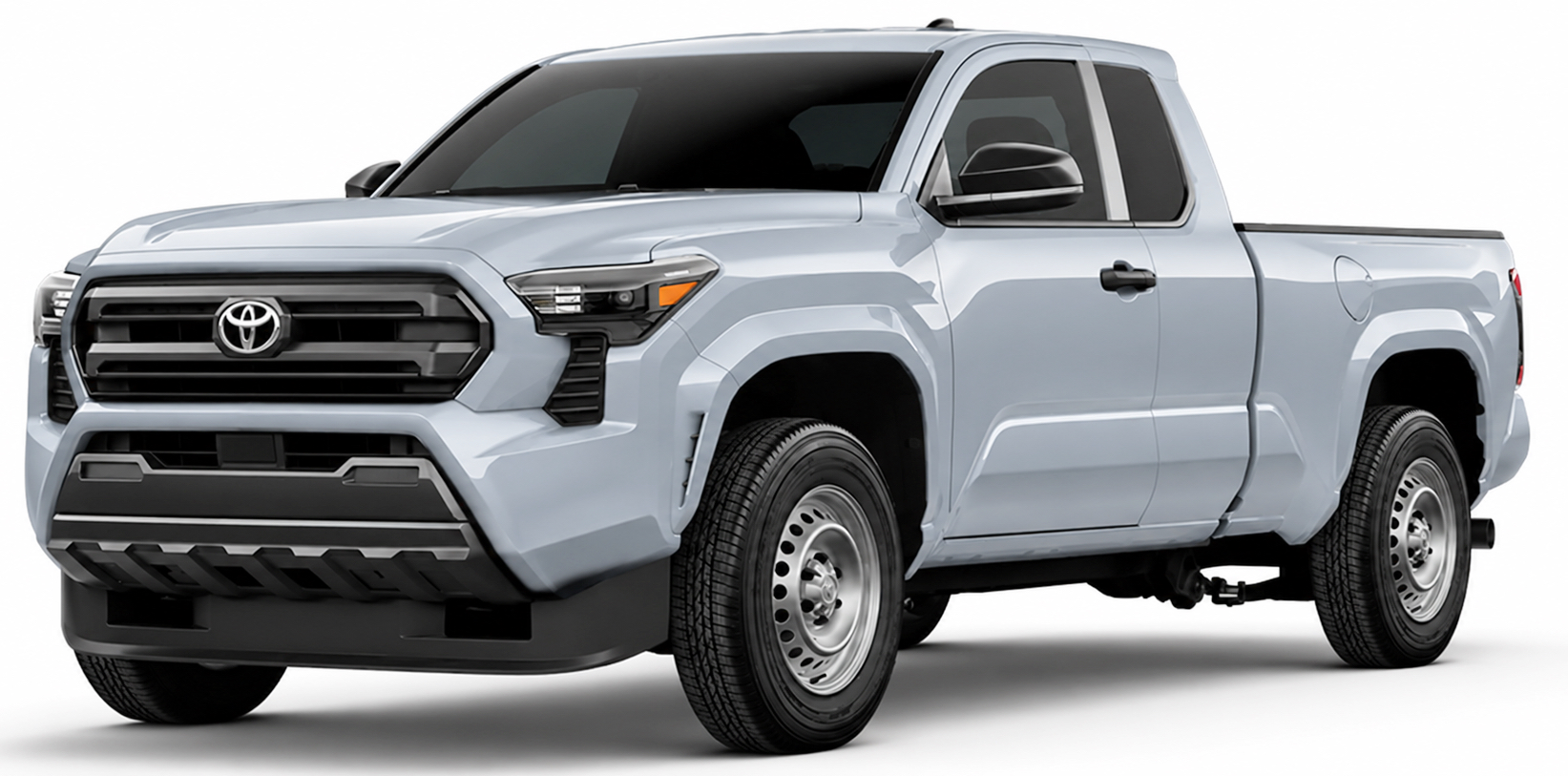
Note that all extended cab pickups currently on the market have rear-hinged doors except 2024 and later Toyota Tacoma Xtra Cabs. Company engineers felt the smaller number of sales did not justify the costs of developing the extra doors, so there is no direct way to access the rear of the cab. For this reason, the Tacoma Xtra Cab has no rear seat at all – just storage space.
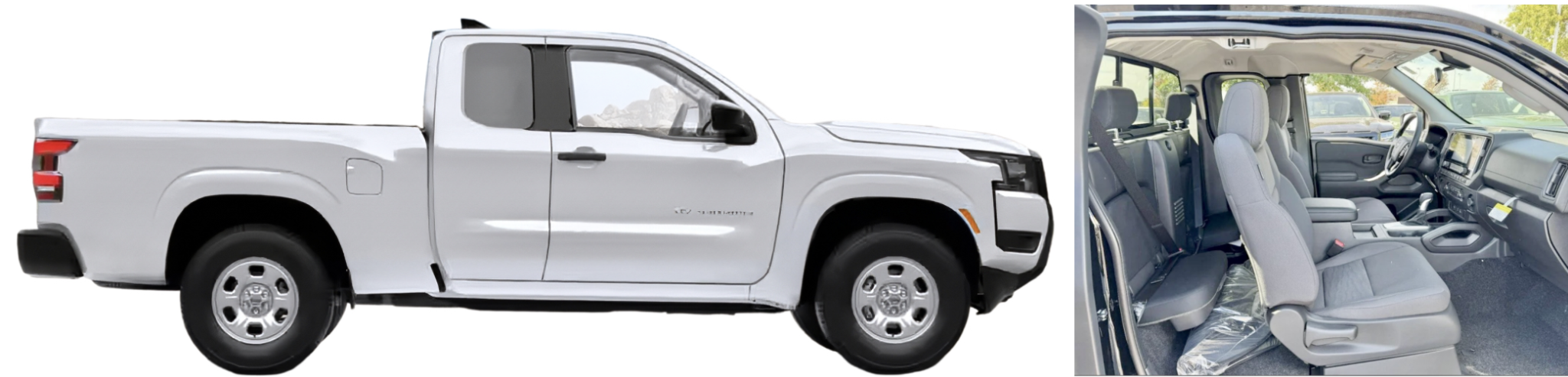
For the 2027 model year, pickups available in an “extended cab” style are the Ford F-Series, Nissan Frontier, and Toyota Tacoma. Different manufacturers have their own names for this layout:
Ford F-series = “Super Cab”
Nissan Frontier = “King Cab”
Toyota Tacoma = “Xtra Cab”
4-DOOR EXTENDED CAB
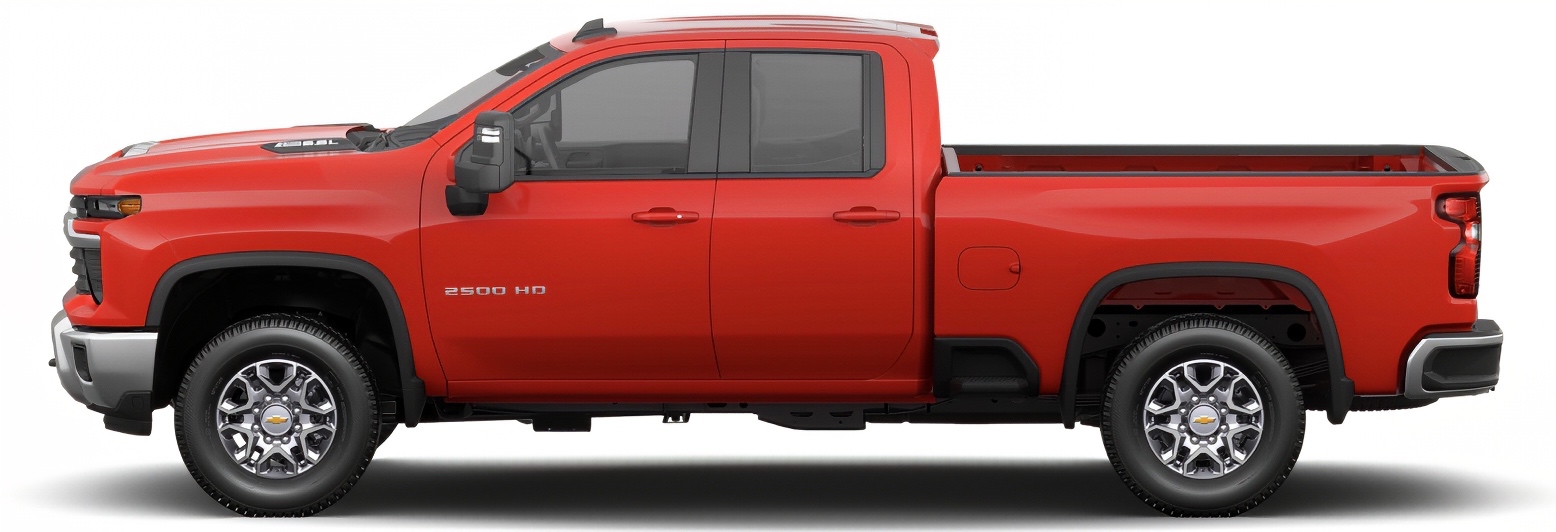
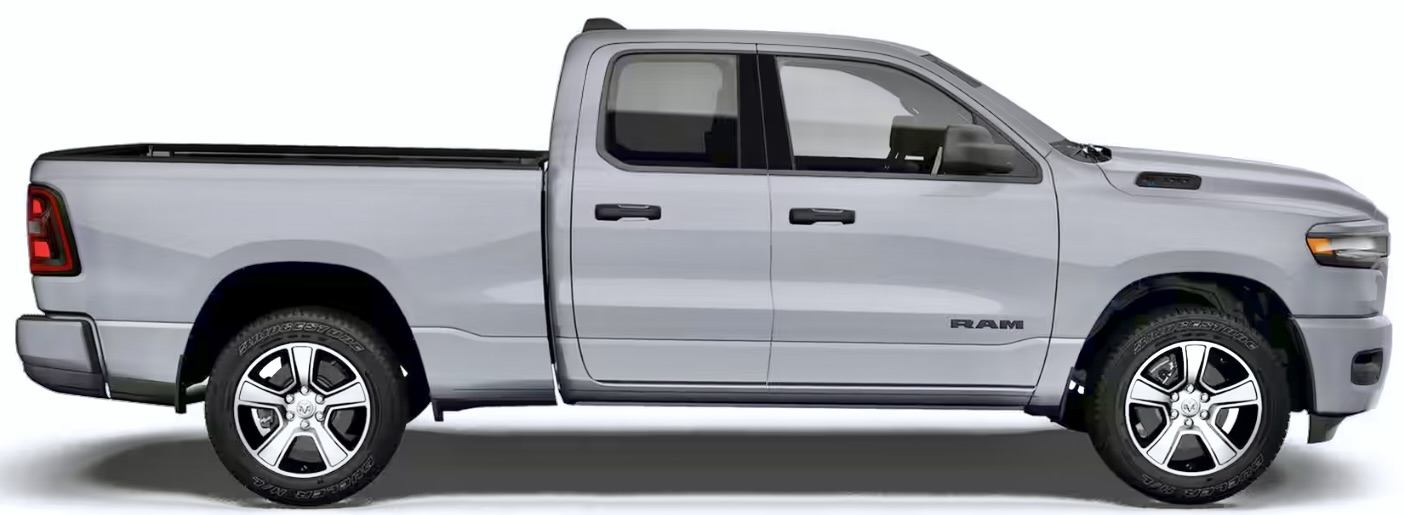
“4-door extended cab” and sometimes “double cab” are industry phrases to define a four-door pickup cab with 4 conventionally-hinged (front hinged) doors and rear doors noticeably shorter than the front ones. This design evolved as a better compromise compared to the two-door extended cab style. With overall cab length that’s about the same as two-door extended cab trucks, the shorter rear doors don’t open backwards – instead, they have traditional handles that allow them to open in the normal fashion independently of the front doors.
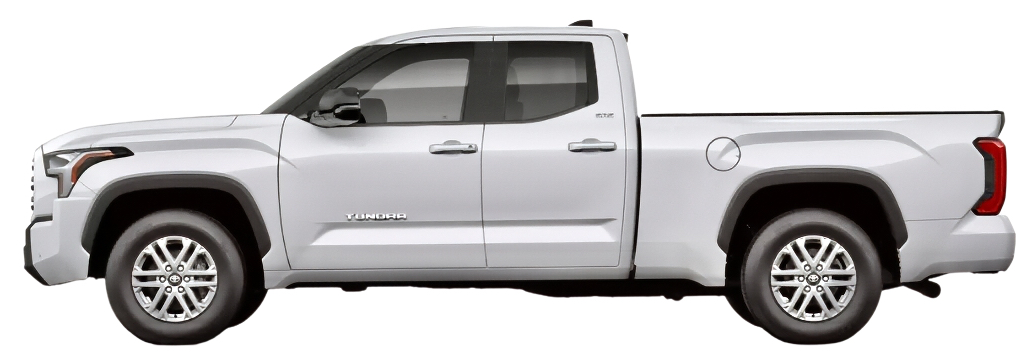
Like two-door extended cabs, four-door extended cabs have the same smaller rear seating area which can reasonably accommodate adults, but with limited legroom. Back seat access is a step up from two-door extended cabs, and overall length of the truck is less than models with 4 larger “crew cab” doors (see below).
Today, GM’s full-size pickups (Chevy Silverado and GMC Sierra), Ram 1500, and Toyota Tundra all offer 4-door extended cabs. GM and Toyota call theirs by that name. Ram refers to this cab style as “quad cab”.
CREW CAB
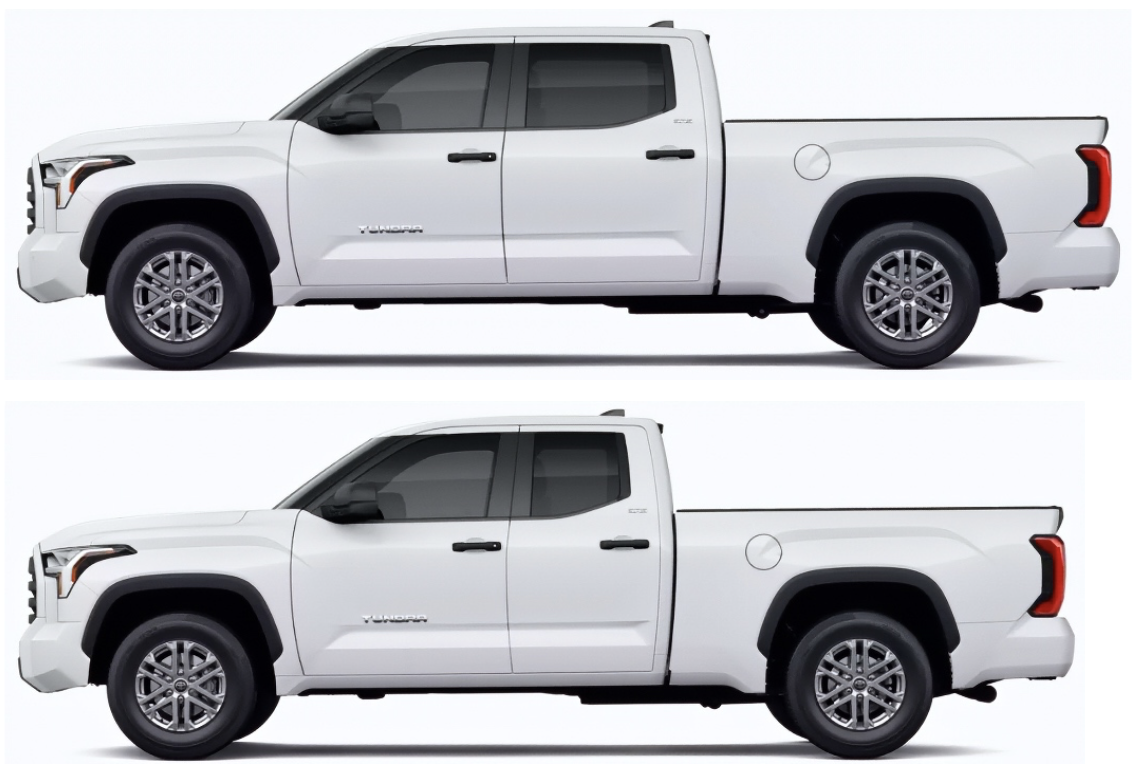
Aptly named as it’s the body style which most easily carries “the crew”, a crew cab has four full-size forward-hinged doors of roughly the same size, and a full rear seat with lots of room. That said, on some models, it may be possible to mistake a crew cab for a 4-door extended cab double cab at quick glance – they’ll look basically the same except for the length of the rear doors. Today, all pickup truck manufacturers offer crew cabs because they are easily the best selling variation. While GM, Nissan, and Ram call theirs “crew cabs”, others have unique names for them:
Alternate Descriptions of Various Manufacturers For Crew Cabs:
- Ford F-150: SuperCrew (note that Ford Super Duty reverts to “Crew Cab”)
- Toyota Tundra: CrewMax
- Toyota Tacoma: Double Cab
The Toyota naming convention is particularly confusing, as a Tundra “Double Cab” is a true double cab, but a Tacoma “Double Cab” is a crew cab. With Toyotas, “double check”!
MEGA CAB
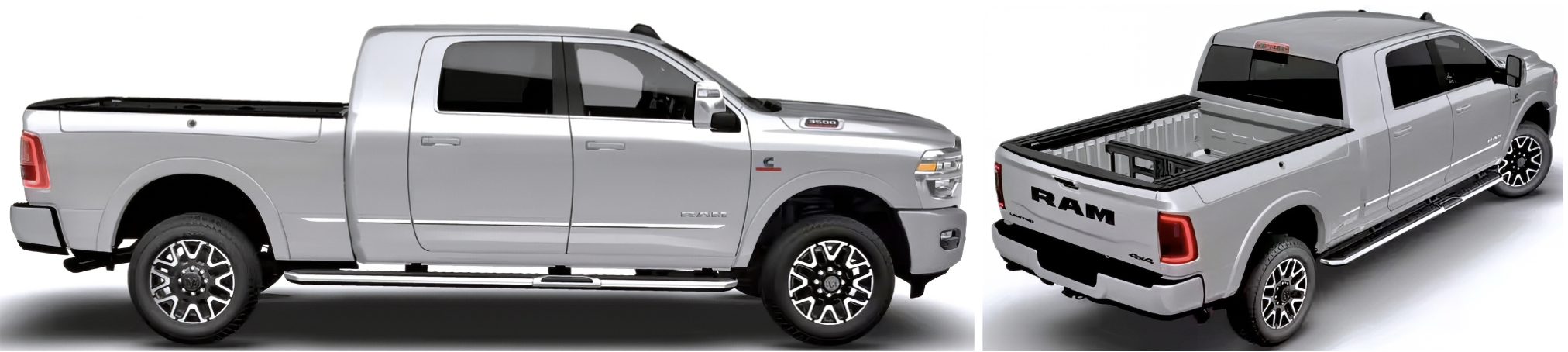
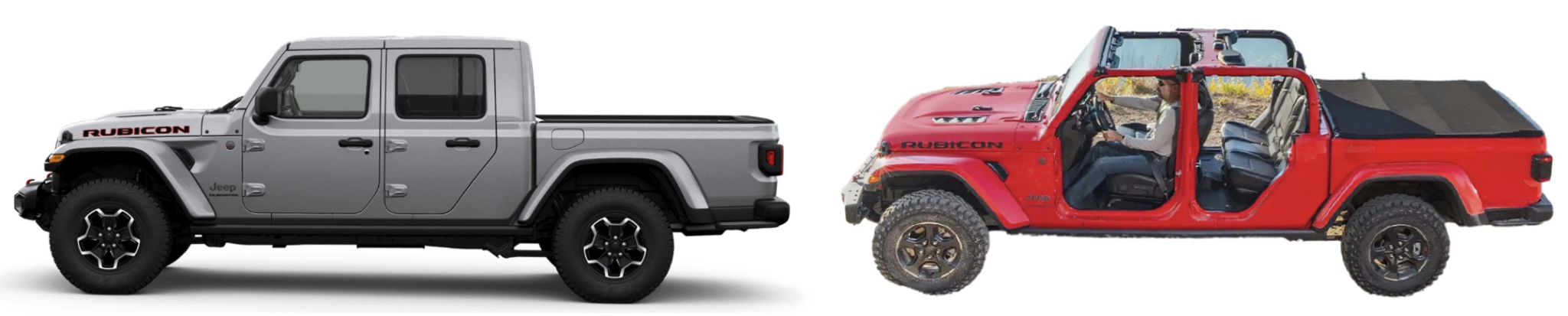
Unique to Ram, and found only in their heavy-duty (2500 and 3500) series, the “Mega Cab” is a crew cab plus a little more. While the four forward doors are similar to a crew cab, the cab itself is stretched behind the rear seat to provide additional interior storage room.
BED OR BOX SIZES
All five of our pickup truck manufacturers offer pickup truck beds in different lengths. Full-size trucks from GM, Ford, Ram, Toyota, and Nissan each offer three different bed sizes. Mid-size trucks such as the Chevy Colorado/GMC Canyon, Toyota Tacoma, and Nissan Frontier offer two bed lengths. NONE of the above offer more than TWO different bed sizes in combination with any ONE cab size.
This is done to keep overall truck length reasonable, and to promote certain popular cab/bed sizes. The answer to the question “how big is your bed?” can be answered either in LENGTH or by NAME. Here are each manufacturer’s makes and models, with the available bed lengths listed. In every case, we are using the same terms as the truck makers use:
FORD:
F-150: 5.5 feet, 6.5 feet, 8 feet
Super Duty: 6.75 feet, 8 feet
Ranger: 5 feet, 6 feet
GM:
Chevy Silverado & GMC Sierra: Short, Standard, Long
Chevy Colorado & GMC Canyon: “Short”, “Long”
RAM:
1500: 5′ 7″, 6′ 4″
2500 & 3500: 6′ 4”, 8′ 2”
JEEP:
Gladiator 5’0”
NISSAN:
Frontier: 5’ 0”, 6’ 1”
TOYOTA:
Tundra: Short, Standard, Long
Tacoma: Short, Long
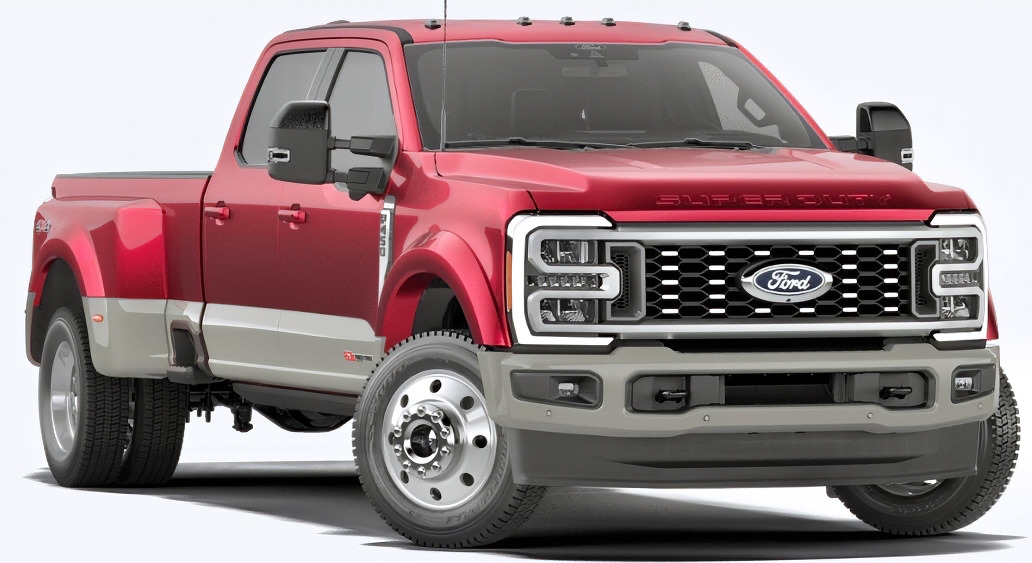
Note that Ford, Ram, and Nissan use numbers to define bed lengths. The actual lengths in every case are fractionally longer than the named size. For example, a Ford Super Duty with an 8-foot (96″) box has an actual measurement of 98.1″. Likewise, the 5’7″ (67″) box on a Ram 1500 measures out at 67.4″.
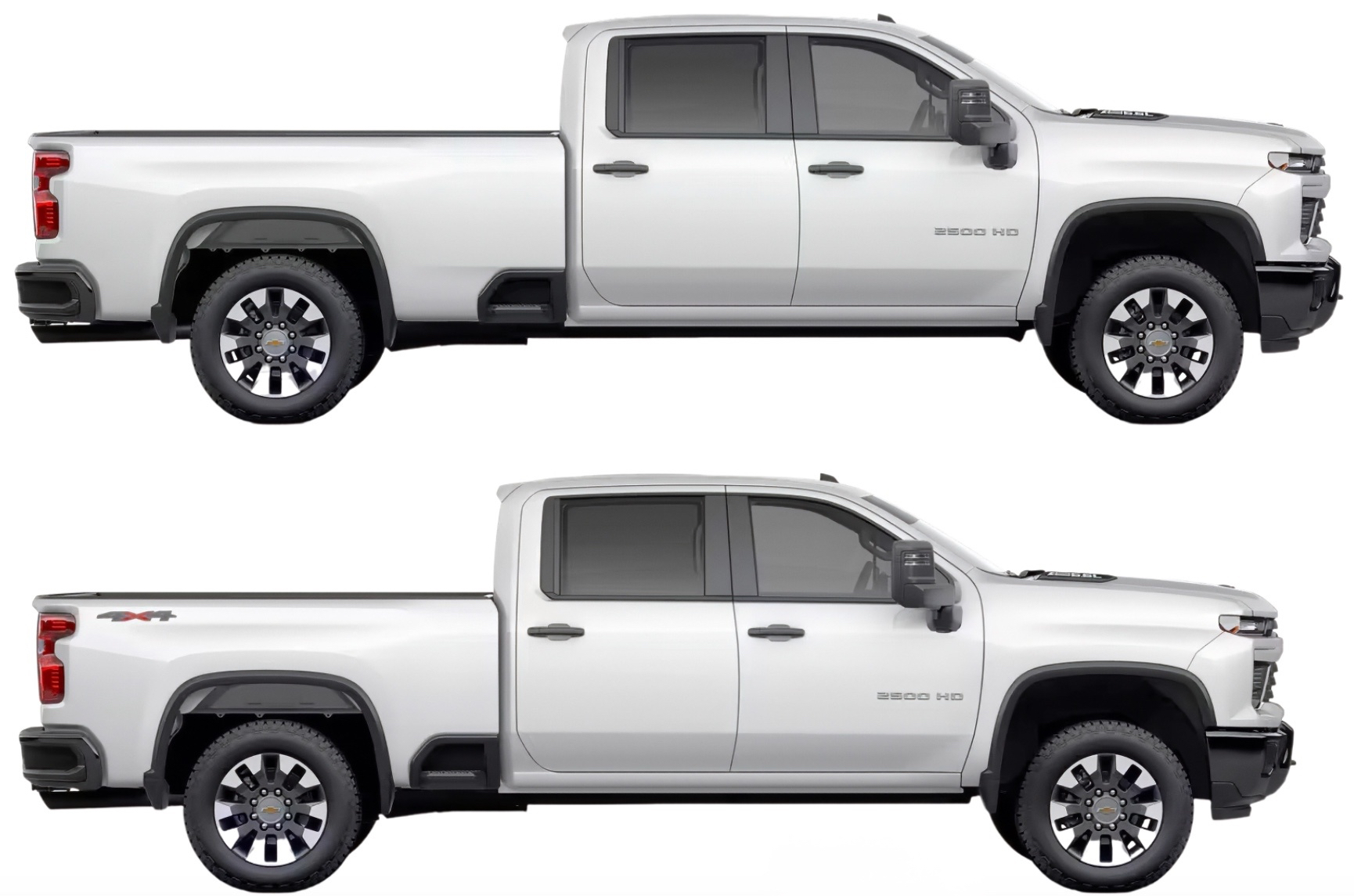
Don’t presume that a “long bed” is always longer than a “standard bed”, even from the same truck company. It depends on the vehicle! For example, a Chevy Colorado (mid-size truck) “long” bed is 74.0″; but the Silverado (full-size truck) “standard” bed is longer at 79.4”. If an accessory product asks you for the exact bed length, you can either refer to your vehicle manufacturer’s website (you must know your specific cab and bed sizes) OR you can take a tape measure to the bed, remembering that it is the inside length measurement you want.

In some rare cases, you may be asked to select an accessory based on your truck’s wheelbase. Remember that wheelbase lengths will vary greatly depending on cab and bed sizes. Please don’t guess! Your best bet again is to check the manufacturer’s website, provided you have a late-model vehicle. You can also measure it yourself, or call your vehicle manufacturer’s Customer Service Department.