Recently, the Facebook group Lost Muscle Cars posed a simple question to its followers – “What was the last muscle car, and what make & model was it?”
To me and most of the people responding, “muscle car” brought to mind everything from the classic muscle car era that ended during the 1970s. American cars with the largest possible engine originally designed for a bigger, heavier vehicle – tuned to the highest level of power attainable at the time. In other words, big V8 in a smaller car that makes car go fast. To me, it doesn’t matter if the “smaller car” part means the car is only a little bit smaller (mid-size Chevelle, Charger, GTO) or a lot smaller (Mustang, Camaro, or Dodge Challenger).
And that “classic” term? To me, muscle cars from the classic era have carburetors, overhead valve engine designs, drum brakes at the rear, and no computers. Lose any of those four characteristics, and the car becomes something else – either a European sports car from that same era, or something more recent than the 1970s. (Okay, there’s one exception to that rule – the Pontiac Trans Am’s WS6 Special Performance Package which added rear factory disc brakes.)
Sure as I have my opinions, others had theirs. As I read through the comments, I found the arguments and points of view were compelling and/or amusing. So I wanted to share.
WHAT IS A MUSCLE CAR?
Naturally, the last muscle car question led to debates about exactly what a muscle car is. One person started it off by saying it must have a big block V8, 4-speed manual, and positive traction rear differential.
Another had a narrower viewpoint – “Muscle cars are intermediate, two door, rear drive, long hood, short deck V8 cars.” Vehicles such as the 1973-74 Pontiac Trans Am “fit under the category of pony car, as do Camaros, Ford Mustangs, Dodge Challengers, and so on”.
WAS THE LAST YEAR 1971?
WAS THE LAST YEAR 1974?
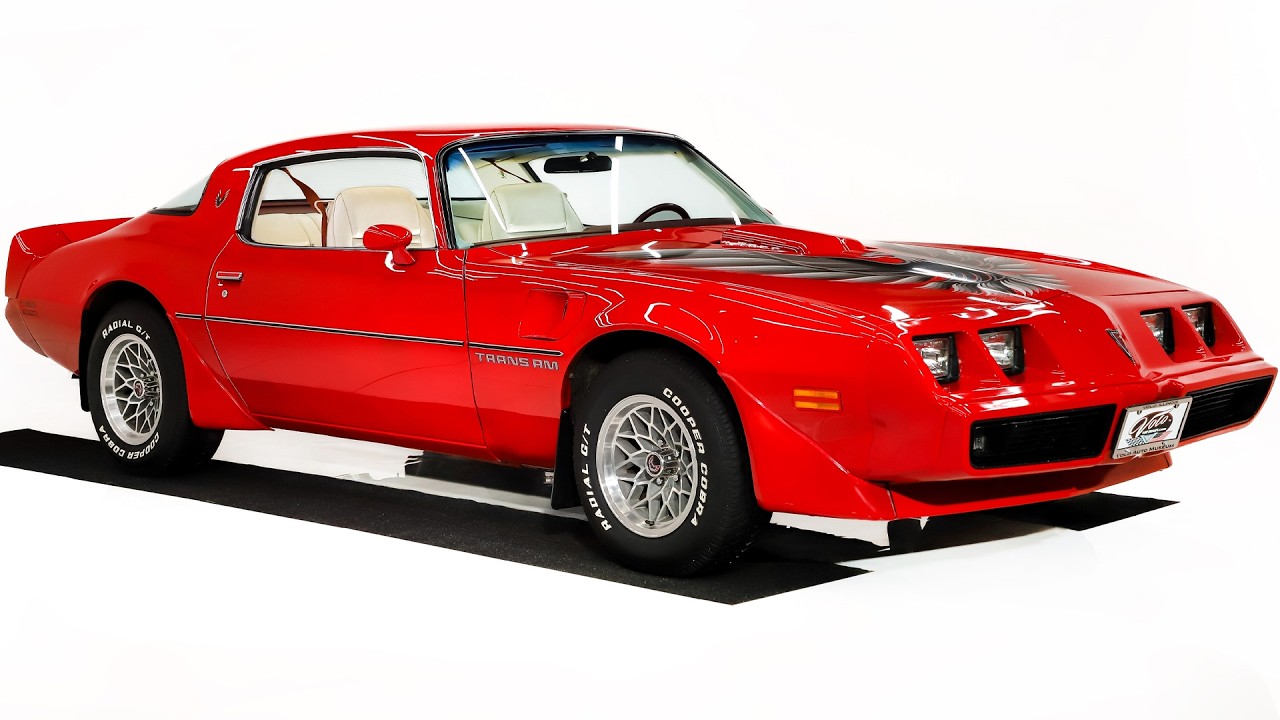
Those who didn’t worry so much about the exact definition of a muscle car’s size felt, in large part, that the last proper muscle car was the 1974 Pontiac Trans Am with the “Super Duty” high output 455-cubic-inch V8.
For example, Scott D. wrote, “Best estimate would be in the 1973-1974 years. You could option a Pontiac Trans Am or Formula with a rare Super Duty 455 engine. You could still also get a Ford 351 Cobra Jet Cleveland in some Ford and Mercury products during 1973-1974. By 1975 it was over”.
John B. wrote, “1974…because in 1975 catalytic converters killed ALL power and by definition, there can’t be a MUSCLE car literally with single exhaust!”
Larry J. – “The last 13 second muscle car of the classic era was the ’74 Pontiac Trans Am with the 455 SuperDuty. Ironically that was also the year that the Lamborghini Countach (the first modern supercar) was released, as well as the Porsche Turbo Carrera”.
OR WAS THE LAST OF THE ERA EVEN LATER IN THE 1970s?
Others disagreed with the 1974 cutoff, saying that if intermediate size cars were the yardstick, then later GM midsize performance packages such as the 1977 Pontiac Can-Am (LeMans), 1975 Chevrolet Laguna (Chevelle), or 1977 Olds 4-4-2 (Cutlass Supreme) coupe were the last of their kind.
A few of the guys made an excellent point I hadn’t thought of, and that was the 1978 Dodge L’il Red Express pickup which was able to bypass existing regulations because of the fact it was a pickup truck. Scott D. made an excellent point, saying “An exception could possibly be made for the 1978 Dodge Lil Red Express Truck that snuck through with some decent horsepower out of a 360 engine that ended up being the fastest domestic production vehicle available in the U.S domestic market for 1978”.
Tom G. agrees with Scott – saying, “While passenger cars were being choked with emission regulations in the mid 1970’s, perhaps the [exempt] 1978 Dodge Lil’ Red Express with its 360cid and 225 HP or the Midnight Express with its 440cid is the last of the original muscle cars…er, vehicles. Or maybe it should be considered the first sport truck”
Tim S. broke from others regarding Trans Am model years – saying it continued to be a proper muscle car after 1974. “Simple answer. The last mid-sized car with a large displacement engine. That would be the 1976 455 Trans Am”. Although if you’ve ever sat inside a Trans Am, you know the interior is way too cramped to be considered anything approaching mid-size. Yes it has a long hood, but its overall size is still shorter than the typical mid-size cars of the day.
Grant G. agreed that the last muscle car was a Trans Am, but felt the last year properly extends out to 1979 instead of 1974. “1979 was the last year of the W72 (6.6 liter V8) in the Trans Am. Pontiac was still in there punching long after other car makers went to small blocks and tape packages”.
Others answered the question with more recent vehicles such as the 1986-87 Buick Grand National, later Corvette generations, and 2020’s Dodge Chargers and Challengers should be included in this muscle car exercise. Kurt K. felt an argument could be made for the 1993 Ford 5.0 Mustang because it was the last V8 rear-wheel-drive car “with no electronic nannies such as ABS or traction control, etc”.
Let us know what you think!